Minecraft map Minecraft · 1.16+ · Java + Bedrock

Ruined Portal Finder

Every ruined portal in your seed. Free obsidian and a gold pickaxe enchantment most of the time.

Ruined Portals are broken Nether portal structures generating in every Minecraft biome across the Overworld and Nether — above ground, underground, or underwater. Loot chests contain obsidian, gold blocks, gold ingots, and enchanted iron pickaxes. Any ruined portal can be quickly repaired with obsidian and flint & steel for a free Nether entrance.

Where
Anywhere (surface, underwater, underground)
Biome
All overworld + nether
Loot
Golden Apples · Obsidian · Enchanted Book
Danger
None
Broken nether portal frame with obsidian and netherrack scattered at the base
Jump to:
🏠
Village
🏛️
Stronghold
🏗️
Monument
⛩️
Temple
🏚️
Mansion
X: 0   Z: 0   |   -   |   Seed: -
Overworld — Java 1.21.4

Ruined Portals Found

Sorted by distance from 0,0

Enter a seed to find structures

Save Your World Map

Create a free account to save custom markers, track explored structures, and share your world.

Ruined portals are partially constructed Nether portal structures found throughout the Overworld and Nether. The SeedLander Minecraft Ruined Portal finder shows you exactly where each one generates across a wide radius in your seed, helping you collect free obsidian, gold blocks, and enchanted gear early in your survival world.

Each Ruined Portal has a loot chest containing gold items, obsidian, flint and steel, and sometimes enchanted equipment. The portal frame itself provides free obsidian that can be harvested or completed. Enter your seed to find every Ruined Portal on both Java and Bedrock editions.

Ruined portals are one of the most common structures in the game, generating approximately every 25 chunks across virtually every biome in both the Overworld and Nether. Their frequency and valuable loot make them excellent early-game targets that accelerate your survival start significantly.

A Ruined Portal near spawn is one of the strongest early advantages in Minecraft. If the portal only needs one or two obsidian blocks to complete, you can have Nether access within minutes — long before you would normally have a diamond pickaxe. The enchanted gold equipment from the chest provides early armour, and nearby gold blocks give you materials for golden apples or powered rails.
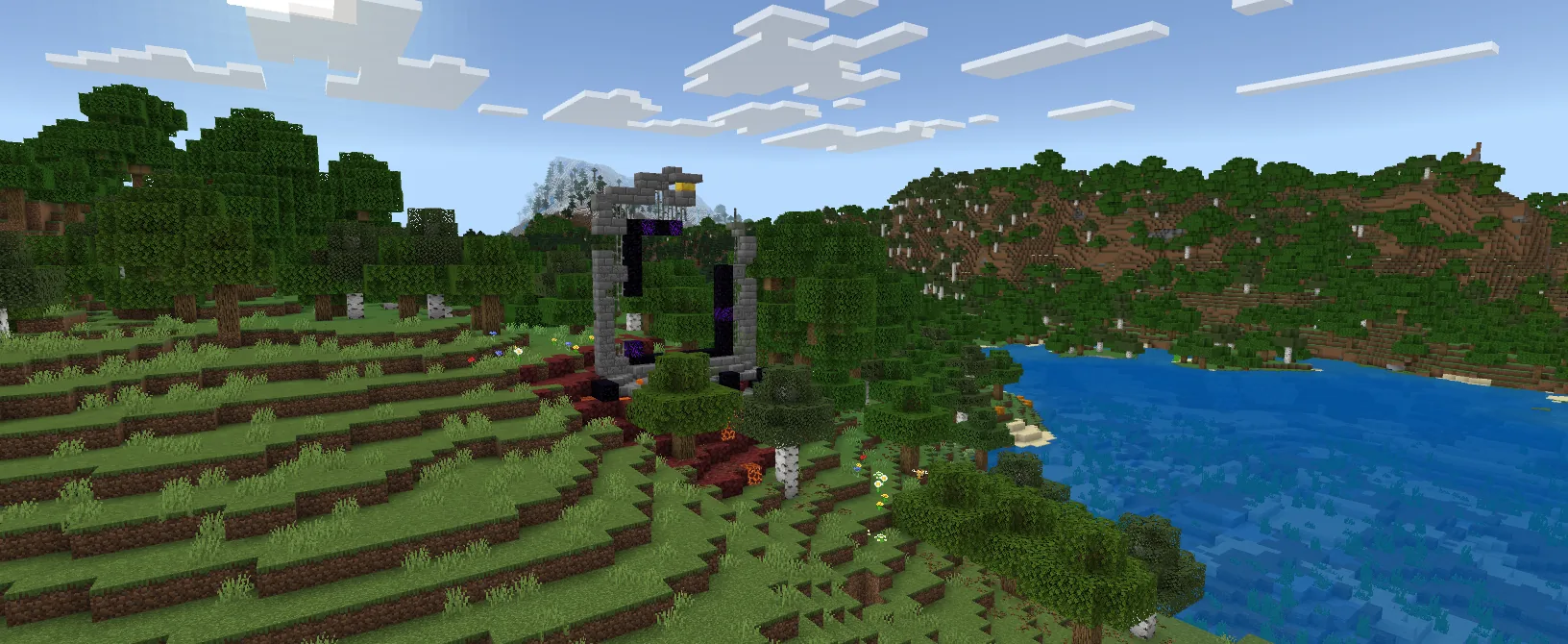
A scenic shot of a Minecraft ruined nether portal — broken obsidian frame against an open landscape

Frequently Asked Questions

How Ruined Portals Work in Minecraft

Ruined portals are the game's everywhere-structure. They're scattered across every biome in both the Overworld and the Nether — broken obsidian frames, occasionally still holding together enough to activate. Each one comes with a small loot chest, gold blocks in the frame, and just enough obsidian that a few repairs later you've got a working Nether Portal for free.

The finder above shows every Ruined Portal in a wide radius of your seed. Pop your seed in, pick your edition, and the pins land on every ruin across overworld and Nether. Great for a quick obsidian source and an early-game Nether route. Switch to the full Seed Map if you want to see Ruined Portals alongside Villages, biomes and other surface structures.

An underwater Minecraft ruined nether portal made of obsidian and crying obsidian
Underwater ruined portal — same loot chest, harder to spot. Bring a water-breathing potion if you fancy diving.

Where You'll Find Them

  • Overworld ruinsOverworld Ruined Portals can spawn in just about any biome. You'll typically find them sitting on grass, half-buried in sand or hillsides, underwater off beaches, or even floating up on mountainsides.
  • Nether ruinsNether Ruined Portals appear in any Nether biome — Crimson Forest, Warped Forest, Nether Wastes and the occasional Soul Sand Valley. The Crimson Forest variants tend to be partly overgrown by red fungus, which makes them harder to spot from a distance.
  • Gold blocksSome portal frames have gold blocks built into them, especially the larger ruined variants. Mining them out is a quick early-game source of gold ingots if you haven't broken into a Nether gold supply yet.
  • Repair costMost frames need 3 to 7 obsidian blocks added to make a working portal, and a flint and steel to light it. Be aware that some of the visible "obsidian" is actually crying obsidian, which doesn't conduct portal energy — replace those with the real thing.
  • Buried portalsSome Ruined Portals are completely submerged or buried under terrain. The finder pin lands on the portal itself rather than a visible surface marker, so when you arrive it's worth digging around the spot before assuming you're in the wrong place.

The Loot Chest

Notable pulls

  • Golden apples roll regularly, and the very rare Enchanted Golden Apple (around 1-in-400 per chest) is the jackpot pull.
  • Gold ingots, enchanted golden tools and armour, plus obsidian blocks to help finish the frame.
  • Fire charges — handy for lighting the portal if you haven't crafted a Flint and Steel yet.

Common drops

  • Gold nuggets, iron nuggets, flint, flint and steel, all the small filler stuff.
  • Bells occasionally — decorative but nice finds.
  • Bells and clocks occasionally turn up — decorative odd pulls that round out the chest.

Turning a Ruin Into a Free Nether Trip

  1. Travel to the portal pin and study the frame layout. Ruined Portals always use the standard 4×5 obsidian shape that a working Nether Portal needs (4 blocks wide, 5 blocks tall) — they're just missing several blocks where the world generator has chewed them out. Walk around the frame and note exactly which obsidian blocks are present so you know how many more you need before you start mining for materials.
  2. Count the missing blocks and gather replacement obsidian. Most Ruined Portals are missing three to seven blocks. The fastest way to make new obsidian is to find a lava pool nearby, place a water source next to it (which turns flowing lava into obsidian instantly), then mine each block with a diamond or netherite pickaxe. The loot chest near the portal also frequently contains a few obsidian blocks already, which can save you the trip.
  3. Fill the gaps to complete the frame. Note that the four corner blocks of a Nether Portal don't actually need to be obsidian — the portal still activates with regular blocks (or no block at all) at the corners. So if you're three short of a full set, leave the corners empty and use your obsidian for the edges where it's actually required.
  4. Light the portal with Flint and Steel or a Fire Charge. Flint and Steel is crafted from one iron ingot and one flint, but Ruined Portal chests very often contain Fire Charges (a craftable equivalent that's already lit) so check the chest before you craft. Right-click any inside face of the obsidian frame and the purple swirling portal activates — you've just unlocked a Nether route hours earlier than the usual diamond-pickaxe route would have allowed.
  5. Build a backup portal at your base before you step through. The first time you enter a portal, the game generates a corresponding Nether Portal in the Nether at the linked coordinates (Overworld coords ÷ 8). For Ruined Portals in random places, that link can land you in a sea of lava or stranded on a tiny island. If you build and light another portal at your home base first, you'll have a known-safe entry point to fall back to.

Why this is an early-game gold mine

A nearby ruined portal at spawn is one of the best early finds in a world. It cuts out the entire obsidian grind (you'd otherwise need a diamond pickaxe to mine any). Combine with a close village for beds and trading, and you've got a week-one route to the nether. Nether fortresses are the next target once you're through — bring gold armour to keep piglins calm.

Track your portal network

Creating a Free World on SeedLander shows every Ruined Portal across a wide radius in your seed. You can also add custom markers and portals for the spots that matter to you.

Premium World (£1.99/mo per world, first 14 days free) lets you save paired portal coordinates and plan a Nether-highway route, add unlimited custom map markers and portals, and share routes with your team mates (with our team addon).