 Minecraft · 1.16+ · Java + Bedrock
Ancient Debris Finder
Every ancient debris block in your seed. Peaks at Y 15 in the Nether. Java and Bedrock — pick the version, paste your seed, map every hotspot before you TNT.
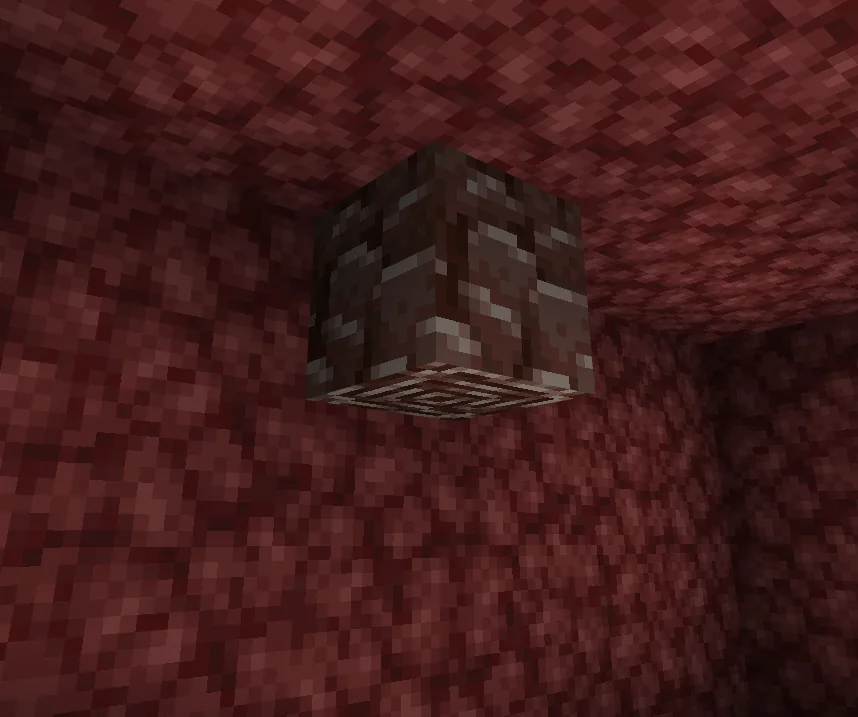
Ancient Debris is the rarest ore in Minecraft, generating only in the Nether between Y 8 and Y 22 with peak density at Y 15. It requires a diamond or netherite pickaxe to mine, and smelts into Netherite Scrap — four scraps plus four gold ingots craft one Netherite Ingot. Because the Nether is dense stone, most players find debris by TNT-mining or bed-blast mining at Y 15. Ancient Debris cannot be exposed to air when generated, so many blocks are hidden inside solid netherrack.
- Where
- Y 15 peak (Y 8 to 22 range) · Nether only
- Biome
- Any Nether biome
- Loot
- Ancient Debris (smelts to Netherite Scrap)
- Danger
- Lava lakes · Ghasts · Piglin brutes
 Diamond Ore
 Ancient Debris
 Emerald Ore
 Lapis Lazuli
 Gold Ore
 Redstone Ore
 Iron Ore
 Coal Ore
 Copper Ore
How the ancient debris finder works
Type your world seed, pick the edition and the version you're playing. The tool plots every ancient debris block within a 256-block radius of your Nether coordinates. Each result shows exact X, Y and Z — those are already Nether coordinates, so no portal-calculator conversion needed.
Head to the coordinates for debris, or copy them with one click and paste them straight into the Minecraft command line — if cheats are enabled — to teleport to the exact block. Ancient debris is the rarest ore in the game, so a "cluster" is usually a single block; the finder shows every one, sorted by distance from your current position.
Best Y-level for ancient debris
The peak is somewhere between Y 15 and Y 16 — the wiki lists Y 16 as the highest generation rate on average, and Y 15 as the level with the most exposed debris blocks in practice. Y 8–22 is the high-concentration band — that's where you get the fastest debris-per-hour on a strip mine. Debris also spawns above and below that band at much lower density (a sparse second distribution runs all the way up to Y 119), so it's not "impossible" to find at Y 40 or Y 100 — it's just slower. Rather than guess, the finder above shows you every debris block with its exact Y-level so you can head straight for what's actually there in your seed.
Y 15 is well below the "lava lake floor" (which sits around Y 30–32), but the netherrack at Y 15 still has lava pockets — you'll break a wall and find a small pool waiting. Bring fire resistance potions before you set off. Most debris blocks at Y 15 are fully enclosed — you can't see them with your eyes because they're inside walls. That's why bed and TNT mining work so much better than pickaxe strip-mining.
TNT mining vs bed mining vs strip mining
Ancient debris has a blast resistance of 1200 — very high, equivalent to obsidian. That's why explosions don't destroy the ore itself; they only clear the netherrack, cobblestone and gravel around it, exposing every debris block within blast radius. This is the entire reason bed mining and TNT mining exist. Mojang covers the same techniques in their official How to Find Ancient Debris guide.
- Bed mining. Beds explode when placed in the Nether. Dig a small tunnel at Y 15, place a bed, break the bed head (safe distance behind an obsidian block or corner). Each bed clears ~9 blocks of netherrack around it. Cheap on materials — three wool + three planks per bed.
- TNT mining. Craft TNT from 4 sand + 5 gunpowder. Fill a chunk at Y 15 with a grid of TNT (one every 4 blocks), light one corner, run. Larger clearance area than beds but material-intensive.
- Pickaxe strip mining. Slowest — you're only exposing the blocks directly next to your tunnel. Fine for early game before you have TNT or beds, but you'll miss ~90% of debris blocks that generate inside solid walls.
Whichever method you use, the finder is what stops you from spending an hour bed-blasting an area with no debris in it. Look at the map, pick a zone with three or four debris blocks close together, and blast that chunk instead of a random one.
What you can craft from ancient debris
Ancient debris smelts into Netherite Scrap in a furnace or blast furnace (blast furnace is twice as fast). Four netherite scraps plus four gold ingots craft one Netherite Ingot — the material used to upgrade diamond gear via a Smithing Table with the Netherite Upgrade Smithing Template. Templates drop from Bastion Remnant loot chests. For the lore side of things Mojang wrote a nice Block of the Week: Ancient Debris piece.
A full netherite loadout (sword, pickaxe, axe, shovel, hoe, helmet, chestplate, leggings, boots) requires 9 netherite ingots — that's 36 ancient debris and 36 gold ingots. If you're grinding for full netherite, the finder becomes essential once you've cleared the obvious blocks around your Nether portal.
Java vs Bedrock: same peaks, different placement
Both editions use Y 15 as the peak with the same distribution shape. What differs is the underlying noise the game uses to decide where each block lands. A Java seed and a Bedrock seed of the same number produce different Nether debris distributions. Pick the edition matching the game you're playing.
One difference to watch: Bedrock generates slightly more ancient debris on average than Java in most seed samples we've tested — a quirk of how the Bedrock ore attempts handle the "cannot be exposed to air" rule at generation time. If you play both editions, don't compare debris counts between them and assume the finder is broken.
Frequently asked questions
Y 15 for a bed mine — place the beds at Y 17 so the blast reaches Y 15 without pushing toward the lava lakes around Y 30. Y 15–16 is the peak generation rate. Y 8–22 is the high-concentration band overall; debris does spawn above and below that band too (a sparse distribution runs up to Y 119), just at much lower density — so don't bother mining outside 8–22 unless you're already up there for another reason.
A full netherite loadout — sword, pickaxe, axe, shovel, hoe, helmet, chestplate, leggings and boots — needs 9 netherite ingots. That is 36 ancient debris (each ingot needs 4 scraps, each scrap is one debris) plus 36 gold ingots. If you skip the hoe you save 4 debris.
Yes. Beds explode when placed in the Nether — this is the same mechanic used for Nether crystal farming. Place a bed at Y 15, break the bed head from behind a safe corner, and the explosion clears roughly 9 blocks of netherrack while leaving the ancient debris intact (debris has very high blast resistance).
A diamond pickaxe or better. Iron, stone and wooden pickaxes will not drop anything — the block breaks but no item drops.
Yes, and it clears a larger area than beds per explosion. Craft TNT from 4 sand and 5 gunpowder each, place a grid of TNT at Y 15 (one every 4 blocks), light a corner, run. Material-intensive — beds are cheaper on wool and planks.
Ancient debris cannot be exposed to air when it generates, so most blocks are fully embedded inside solid netherrack. The finder knows where they are, but you have to dig or blast to actually reveal them. That is the whole point of bed and TNT mining.
Yes. Pick Bedrock in the edition dropdown. Bedrock actually generates slightly more debris on average than Java in most seed samples we have tested.
Yes. Sign in, save the seed as a world in your account, then upgrade the world to Premium (£1.99/month). Premium marks debris as mined so the finder filters out blocks you have already pulled — useful when you are grinding for a full netherite loadout over multiple Nether trips. See Premium features →
Related Minecraft finders
Netherite
Enough ancient debris for full netherite. 24 debris = full tools + armour. Map every block in your seed before you TNT-mine.
Diamond
Every diamond vein in your seed. Peaks at Y -59. Java and Bedrock — pick the version, paste your seed, map every cluster before you swing a pickaxe.

Nether Fortress
Find every Nether Fortress in your seed and head straight for the blaze rods, Nether Wart and chest loot.

