 Minecraft · 1.18+ · Java + Bedrock
Diamond Finder
Every diamond vein in your seed. Peaks at Y -59. Java and Bedrock — pick the version, paste your seed, map every cluster before you swing a pickaxe.
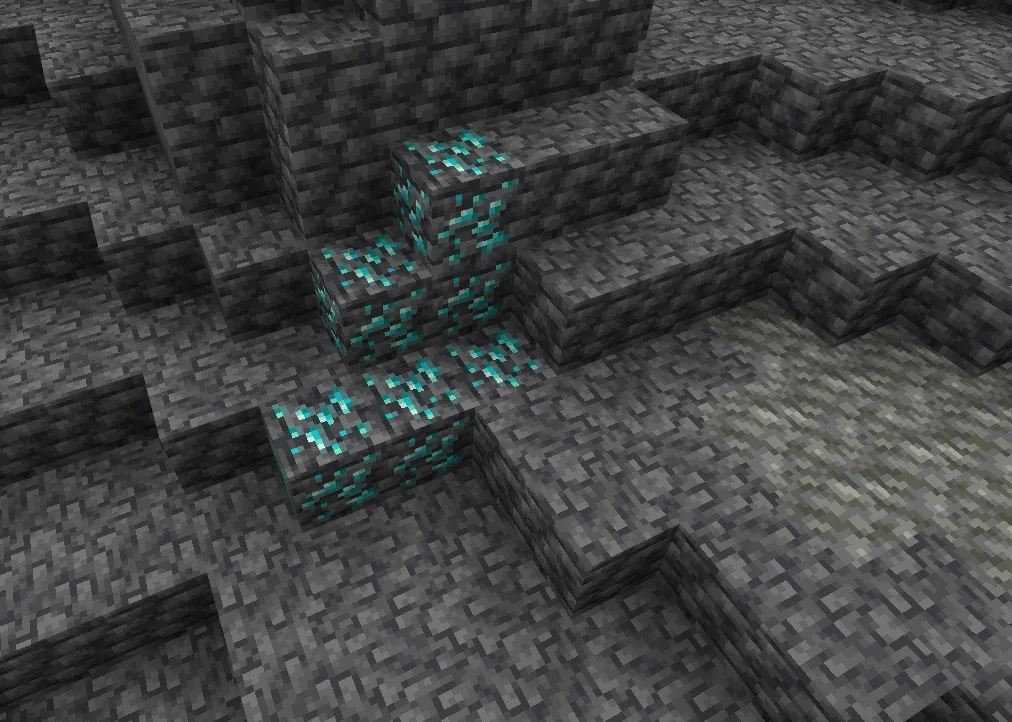
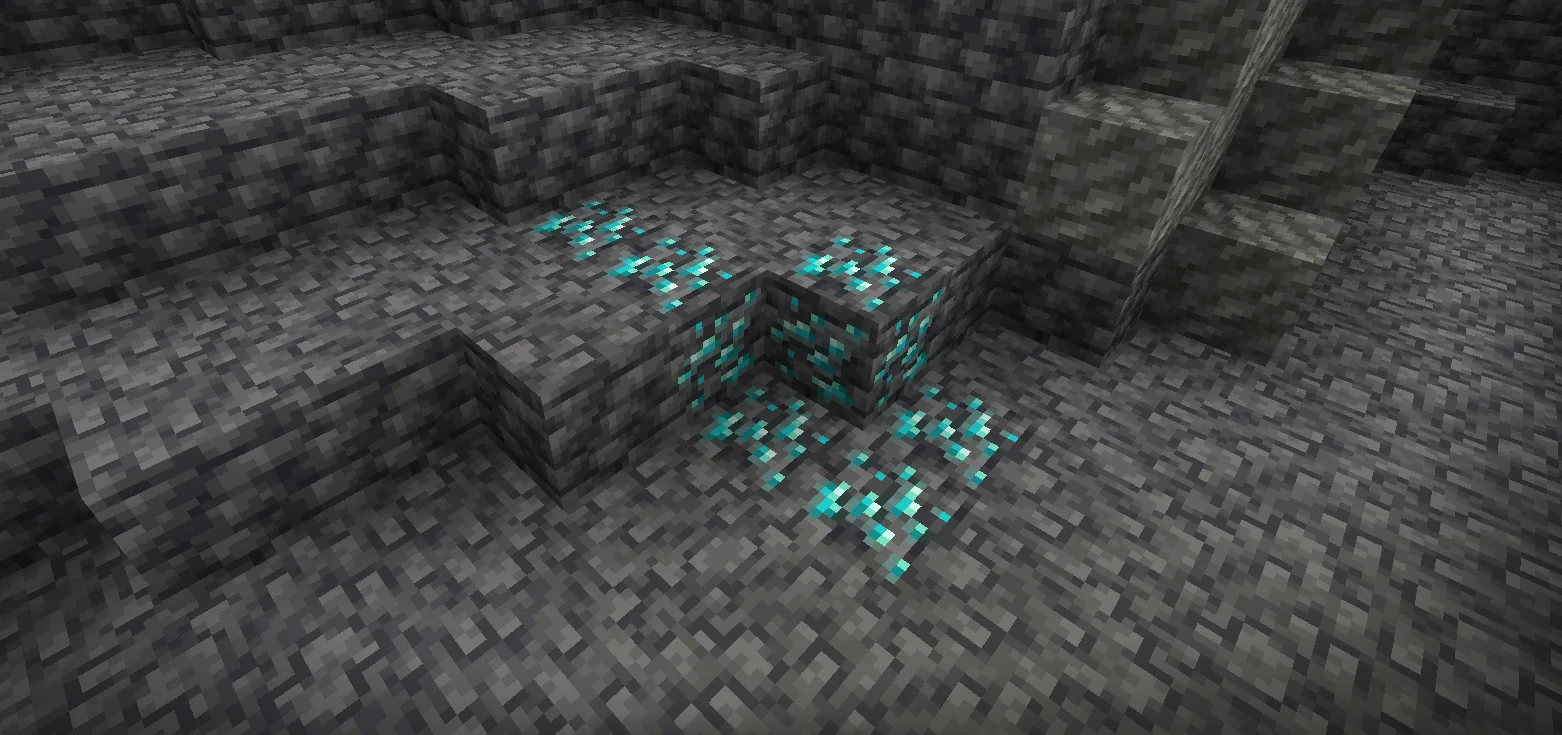
Diamond ore is the mid-game milestone material in Minecraft, used to craft the pickaxe you need for obsidian, ancient debris and enchanting tables. Diamond spawns between Y 16 and Y -64 in every Overworld biome, with the peak generation rate at Y -59 (one block above bedrock). Deepslate replaces stone-variant diamond ore below Y 0. Java and Bedrock use the same Y-level rules but different placement noise — the finder handles both.
- Where
- Y -59 peak (Y 16 to -64 range)
- Biome
- Any Overworld biome
- Loot
- Diamond · Deepslate Diamond Ore
- Danger
- Lava lakes Y -50 and below
 Diamond Ore
 Ancient Debris
 Emerald Ore
 Lapis Lazuli
 Gold Ore
 Redstone Ore
 Iron Ore
 Coal Ore
 Copper Ore
How the diamond finder works
Type your world seed, pick the edition (Java, Bedrock or Java Large Biomes) and the version you're playing on. The tool plots every diamond vein within a 256-block radius of your current coordinates — each result shows exact X, Y and Z, estimated cluster size, and walking distance from where you started.
Head to the coordinates for diamonds, or copy the coordinates with one click and paste them straight into the Minecraft command line — if cheats are enabled — for a fast teleport to the vein.
Best Y-level for diamonds
Y -59 is the peak for diamond generation on both Java and Bedrock. Diamond can spawn anywhere from Y 16 down to bedrock (Y -64), but the density climbs the deeper you go. The 1.18 Caves and Cliffs update spread diamonds much wider than pre-1.18 (which peaked at Y 12), so if you were used to digging at Y 12 in older worlds, that's why you're finding less than expected — you're now 46 blocks above the peak.
For strip-mining without the finder, Y -58 is the practical sweet spot: it's one block above the top layer of irregular bedrock, so you can run long unbroken tunnels without hitting bedrock every few blocks. Deepslate replaces stone-variant diamond ore below Y 0 — same drops, requires an iron pickaxe or better.
Mining strategy: turn predictions into diamonds
The finder tells you where the veins are. The strategy below is how to reach them fast without dying to lava — Mojang's own The Best Way to Mine guide is worth a skim too if you want the vanilla-flavoured pep talk on branch mining and Fortune enchantment tactics.
- Set up base at the target Y-level. Dig a staircase down to Y -58 before you start branching — it's frustrating to keep re-climbing every time you die.
- Branch every three blocks. Diamond veins are up to 8 blocks per cluster, so a 3-wide branch pattern (dig main tunnel, then branch left/right every 3 blocks) catches every vein in the strip without wasting tunnels.
- Torch every 12–14 blocks. A torch keeps mobs from spawning inside a 7-block radius around it, so one torch every 12 blocks (14 if you count the block the torch itself sits on) keeps the entire strip lit — no need for one every few blocks.
- Always carry a water bucket. Pouring water on lava turns it to obsidian (if flowing) or cobblestone (if still), which stops the "I'm on fire" panic. Also lets you fall from any height safely.
Best diamond pickaxe in the game
Fortune III + Unbreaking III + Mending + Efficiency V. Fortune III averages 2.2 diamonds per block (up to 4 on a lucky roll), Unbreaking III triples effective tool durability, Mending repairs the pickaxe from any XP you pick up, and Efficiency V lets you break deepslate at speed. Combine these into a single pickaxe at an anvil for a tool you'll never actually break.
Java vs Bedrock: same rules, different placement
Both editions use the same Y-level rules and biome eligibility (any Overworld biome — no biome exclusions). What differs is the underlying placement noise that decides where each vein actually lands. A Java seed and a Bedrock seed of the same number generate different worlds — and even after you enter the seed correctly, the diamond positions won't match between editions.
This is why the edition dropdown above matters. Pick "Java" if you're on Java Edition (PC), "Bedrock" for Windows 10, Console, Pocket or the Bedrock version of Realms, or "Java Large Biomes" if you generated your world with that specific world type. Selecting the wrong edition returns predictions that don't match your real world.
Frequently asked questions
Y -59 is the peak spawn rate. Diamonds can appear anywhere from Y 16 down to bedrock at Y -64, but the density increases the deeper you go. For strip-mining without a finder, Y -58 is the practical choice — it is one block above the irregular bedrock layer, so you can run long unbroken tunnels.
Over the 150 seeds we tested across Java and Bedrock, we successfully predict 97% of all ores. Minecraft occasionally fails vein placement when it overlaps with caves, water or air, so a predicted vein might be a single ore block or missing entirely.
Yes. Pick Bedrock in the edition dropdown before searching. Bedrock and Java generate different worlds from the same seed number, so the edition has to match the game you are actually playing.
No. An iron pickaxe or better is enough to mine diamond ore. Stone and wooden pickaxes will not drop anything. Deepslate diamond ore (found below Y 0) has the same tool requirement.
Minecraft tries to place each vein at a specific spot, but the attempt fails if the position overlaps with air, water, lava or another feature. So a predicted vein might be a single block of ore, or simply not there. This is expected behaviour, not a bug in the finder.
Yes. Sign in, add your seed as a world in your account, then upgrade the world to Premium (£1.99/month). Premium tracks which veins you have mined and filters them out of future finder searches so you only see diamonds you have not pulled yet. See Premium features →
Related Minecraft finders
Ancient Debris
Every ancient debris block in your seed. Peaks at Y 15 in the Nether. Java and Bedrock — pick the version, paste your seed, map every hotspot before you TNT.

Stronghold
Every stronghold in your seed with the end portal room pinpointed. No more eye-of-ender runs.
Bastion Remnant
Locate every bastion in your seed. Know which type before you pillar up in the nether.

