Minecraft map Minecraft · 1.13+ · Java + Bedrock

Shipwreck Finder

Every shipwreck in your seed. Treasure maps, suspicious stew recipes, and easy emeralds.

Shipwrecks are broken ship structures generating on Minecraft beaches and in Warm Ocean, Cold Ocean, and Frozen Ocean biomes at Y-levels 40 to 60. Each ship contains up to three chests: a Buried Treasure map, iron ingots, diamonds, emeralds, and enchanted books.

Where
Beach / Underwater (Y 30 to 64)
Biome
Beach / Ocean / Deep Ocean
Loot
Treasure Map · Emeralds · Iron · TNT
Danger
None (surface) · Drowned (deep)
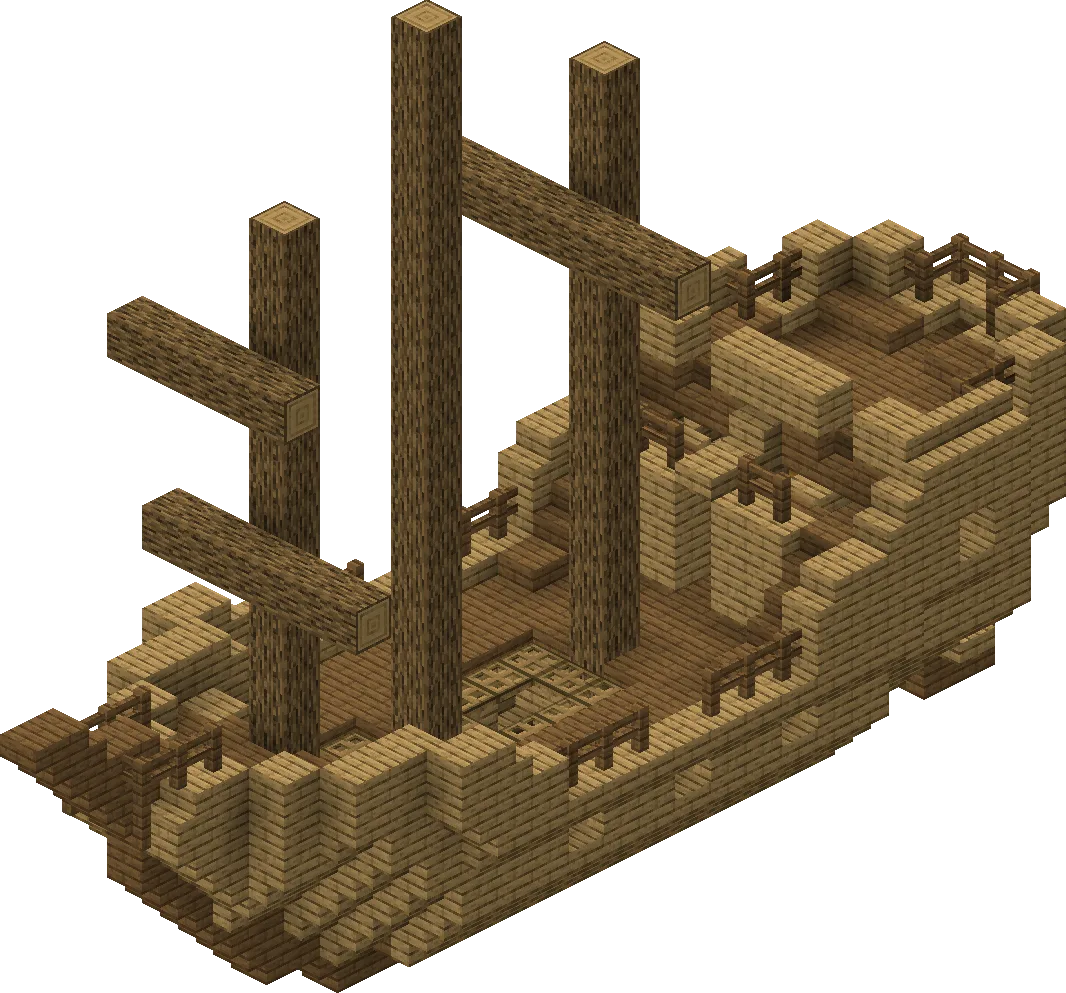
Intact Minecraft shipwreck run aground on a beach with dark oak planks and sails
Jump to:
🏠
Village
🏛️
Stronghold
🏗️
Monument
⛩️
Temple
🏚️
Mansion
X: 0   Z: 0   |   -   |   Seed: -
Overworld — Java 1.21.4

Shipwrecks Found

Sorted by distance from 0,0

Enter a seed to find structures

Save Your World Map

Create a free account to save custom markers, track explored structures, and share your world.

Shipwrecks are scattered across Minecraft’s oceans and beaches, containing up to three loot chests with treasure maps, food supplies, and valuable resources. The SeedLander Minecraft Shipwreck finder reveals the location of every Shipwreck so you can plan efficient ocean exploration.

Each Shipwreck can contain a supply chest, treasure chest, and map chest. The map chest is particularly valuable because it holds buried treasure maps that lead to Hearts of the Sea. Enter your seed to find every Shipwreck on both Java and Bedrock editions.

Shipwrecks come in several variants — full ships, ships missing their bow, and ships missing their stern. The variant determines which chests are present, so a full Shipwreck with all three sections is the most rewarding find. Some Shipwrecks appear on beaches rather than underwater, making them accessible without any special equipment — perfect for the first few minutes of a new world.

The Minecraft Shipwreck finder is especially useful for new worlds where you need early resources fast. A single beached Shipwreck near spawn can provide iron ingots, food, and a buried treasure map within your first day. Planning your spawn area exploration around nearby Shipwrecks gives you a head start that compounds into faster overall progression.
Minecraft Shipwreck finder showing ship locations and treasure map coordinates on the SeedLander map

Frequently Asked Questions

How Shipwrecks Work in Minecraft

Shipwrecks are one of the best early finds in any ocean-biome world. Scattered across every ocean type, they come with up to three chests — a supply chest, a treasure chest, and a map chest — and nine times out of ten the map chest has a buried-treasure map pointing at the nearest Heart of the Sea. They're the start of the whole ocean loop.

The finder above shows every Shipwreck in a wide radius of your seed. Pop your seed in, pick your edition, and the pins land on each wreck — including fully-submerged ones that are impossible to spot from the surface. To see Shipwrecks alongside Buried Treasure and Ocean Ruins (the natural coastal run), open the full Seed Map.

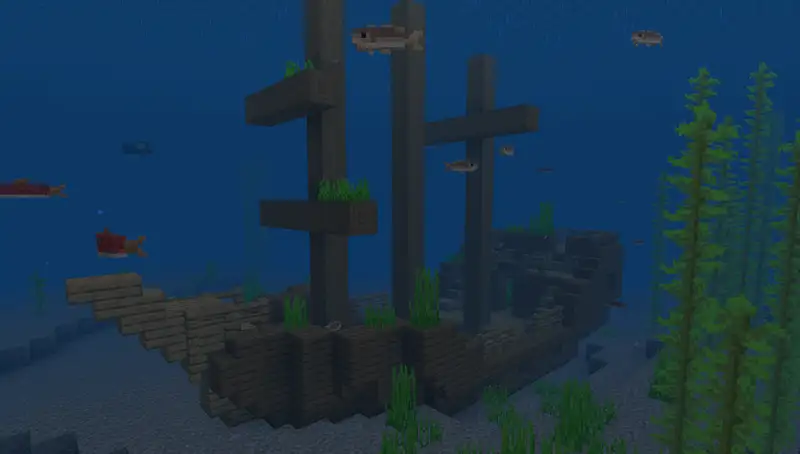
A fully sunken Minecraft Shipwreck lying broken on the ocean floor
Fully submerged shipwrecks are the most common variant — bring a water-breathing potion and torches.

What to know about Shipwrecks

  • Where they spawnShipwrecks generate in every ocean biome, from warm and lukewarm down to cold and frozen. They occasionally beach themselves on shorelines too, which makes them much easier to spot from land.
  • OrientationShipwrecks generate in over twenty configurations — fully intact, tilted, upside-down, or broken in half. The broken variants are missing parts of the hull and lose one or two of their chests in the process, so a complete wreck is the better find.
  • Three chest typesA complete shipwreck has up to three loot chests in different parts of the hull. The Supply chest (bow) carries food, leather armour, bamboo and TNT. The Treasure chest (upper stern) holds iron, gold, emeralds and occasionally a diamond. The Map chest (lower stern) is the prize — it usually contains the buried-treasure map. Nautilus Shells don't actually appear in any shipwreck chest, despite what some tutorials claim.
  • Suspicious blocksSome Shipwrecks also contain suspicious sand patches you can brush for pottery sherds and other decorative items. Bring a brush if you want to walk away with the full archaeology haul.
  • Minecraft versionShipwrecks were added in the 1.13 Update Aquatic. The chain they kick off — find a Shipwreck, loot the treasure map, dig up the buried treasure for a Heart of the Sea, then craft a Conduit — is genuinely one of the most rewarding quest lines in vanilla Minecraft.

The Three Chests Explained

Map chest (lower stern)

  • Buried treasure map — points at the nearest buried treasure chest, which contains a guaranteed Heart of the Sea.
  • Compass, clock, empty map, paper, feathers — navigation and crafting basics for early ocean expeditions.
  • Compass, clock, empty map — navigation basics.
  • Iron nuggets and feathers — filler but stackable.

Supply + treasure chests

  • Supply: cooked salmon, cooked cod, rotten flesh, gunpowder, bamboo, wheat, suspicious stew, and leather armour.
  • Treasure: iron ingots, gold ingots, emeralds, diamonds, iron nuggets, and occasional enchanted bottles.
  • Between both, most Shipwrecks pay back the trip before you even touch the map chest.

How to chain a Shipwreck into a Conduit

  1. Pick a Shipwreck pin and prefer the shallowest one if you have several to choose from. Shipwrecks generate at all sorts of depths, from beached on the shore to sat 30 blocks down in the deep ocean. Without enchanted swimming gear (Respiration on a helmet, Depth Strider on boots) you only get about 15 seconds of breath underwater, so beached or near-surface wrecks let you loot the chests in a single dive without drowning.
  2. Open the Map chest first — it's the one you actually came for. Each Shipwreck has up to three chests in different parts of the hull (Map, Treasure, Supply). The Map chest sits in the lower stern — the back of the wreck, below deck — and contains the Buried Treasure Map along with navigation basics like a compass, clock and empty map. Grab it first in case the wreck is broken and a current has carried items away.
  3. Loot the Supply and Treasure chests next. The Supply chest sits in the bow (front of the ship) and contains wheat, carrots, potatoes, suspicious stew, bamboo, TNT, gunpowder, coal and basic leather armour — useful early-game survival kit. The Treasure chest sits in the upper stern (back of the ship, above deck) and is the more valuable of the two, with iron and gold ingots, emeralds and the occasional diamond. Clear both into your inventory before you swim back up.
  4. Follow the Treasure Map straight to the X. The map shows your position as a small white arrow and the buried treasure as a red X — usually within a few hundred blocks of the wreck, on or near the closest beach. When the arrow sits on top of the X, dig straight down with a shovel; the chest sits two to four blocks below the surface and contains a guaranteed Heart of the Sea.
  5. Collect Nautilus Shells on the way home. A Conduit needs eight Nautilus Shells plus one Heart of the Sea, so you usually need to grab a few extras beyond what the wreck dropped. Drowned holding shells in their off-hand will drop them on death (target them at night near the coast), or you can fish in any open water — Nautilus Shells appear in the fishing treasure pool. Once you have all the parts, craft the Conduit and you've unlocked permanent Water Breathing inside its frame.

Plan a wider ocean route

Shipwrecks are the anchor of the ocean circuit. A coastal run with buried treasures, ocean ruins and an ocean monument all pinned on the map is one of the best weekend projects in the game. The shipwreck is usually what starts the whole chain — one treasure map is all you need.

Plan your Shipwreck exploration

Creating a Free World on SeedLander shows every Shipwreck across a wide radius in your seed. You can also add custom markers and portals for the spots that matter to you.

Premium World (£1.99/mo per world, first 14 days free) lets you pin looted wrecks and log the treasure maps you've collected, add unlimited custom map markers and portals, and share routes with your team mates (with our team addon).