The one-sentence rule
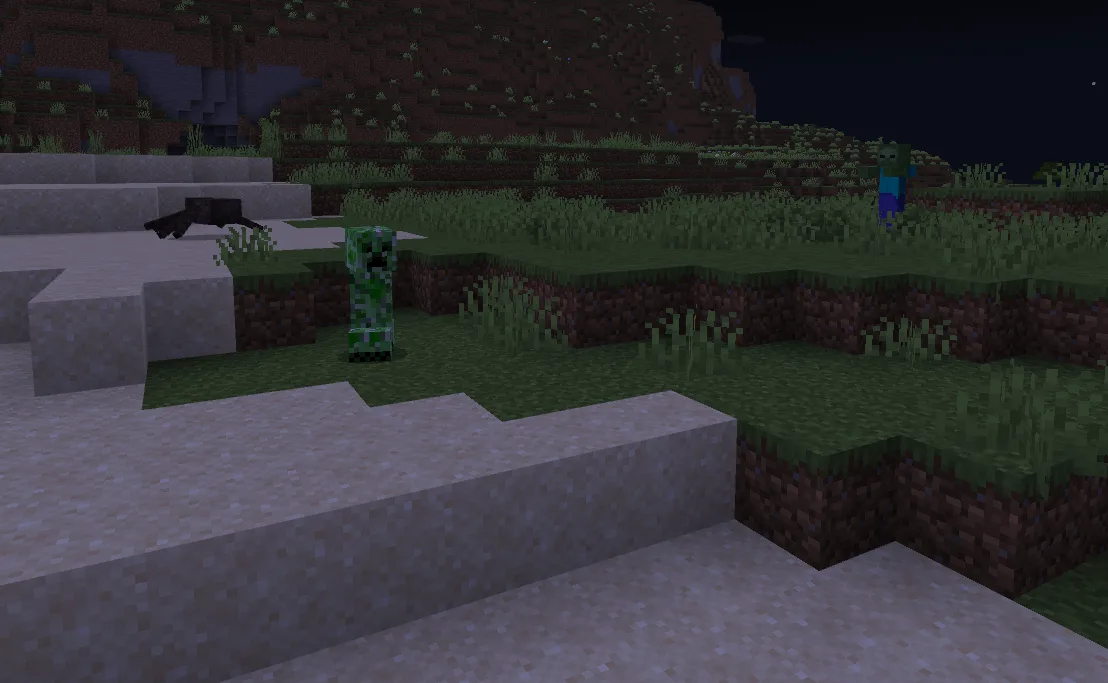
In modern Minecraft (1.18 and later), hostile mobs spawn on any block with a light level of 0. Not "dim" — literally pitch black. If any light at all touches the surface, no mob spawns there.
That's a change from older versions, where mobs spawned at anything below light level 8. If you have a friend who insists you need "light level 8 or higher", they are remembering the pre-1.18 rule. On any recent version, one torch really does clear a much bigger area than it used to.
How far a single torch actually lights
A torch is a light-level-14 source. Light drops by 1 for every block outward. So one torch fully lights everything within 13 blocks in a straight line (14 − 13 = 1, still positive), and the actual "safe from spawning" radius is 14 blocks — anywhere the light level stays at least 1.
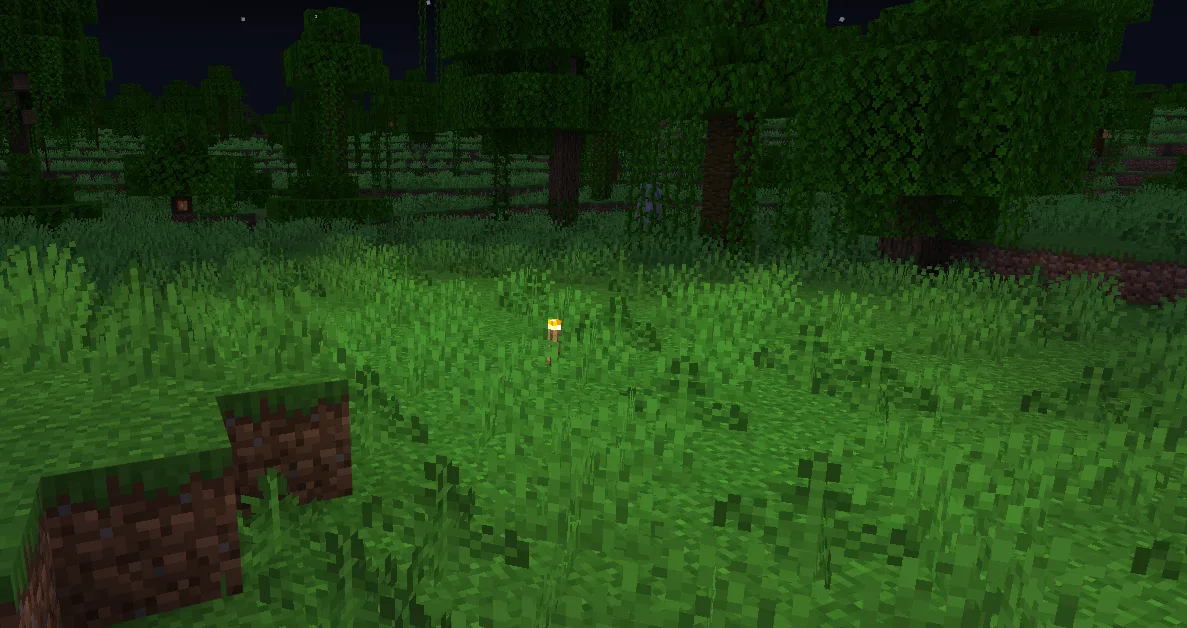
In practice, hills, walls and slabs block light much sooner than 14 blocks. In a flat plains biome you can space torches roughly every 12 blocks on the ground. In a bumpy forest or a cave, put them closer together — every 6 to 8 blocks — because line-of-sight breaks so easily.
Interactive: how far does each light source reach?
Pick a light source below. The grid shows an overhead view of a flat area — the source sits in the middle, and each square shows the light level it receives. Any square that stays black (light 0) is a spot where mobs can spawn.
Real Minecraft light propagation is 3D and walls block it — this is the best-case flat-open-space picture. In a lumpy cave, real coverage is smaller. When in doubt, place torches closer.
Best light sources ranked
Not all light sources are equal. Here's what's actually in your inventory ranked by usefulness:
- Torch — light 14, cheap, one coal or charcoal plus one stick makes 4. Your default answer for pretty much everything. Doesn't work underwater.
- Lantern — light 15 (max), looks nicer than a torch, costs iron and coal. Use where aesthetics matter. Hangs from ceilings without needing a block below.
- Sea Pickle (in water) — light 6 to 15 depending on how many you cluster together. The only light source that works underwater without a soul-lantern trick. Great for aquariums and drowned farms.
- Soul Torch / Soul Lantern — light 10, dimmer than the regular versions, but scares Piglins. Handy for a base near a bastion.
- Glowstone / Sea Lantern — light 15 (max). Full blocks you can walk on. Great for the floor of a base where wall torches would look messy.
- Jack o'Lantern — light 15. Works underwater. Doubles as decoration.
- Redstone Lamp — light 15 when powered. Use it when you want lights that switch off (secret rooms, mood lighting).
- Shroomlight, End Rod, Beacon Beam — situational; if you're in the Nether or the End, use what's to hand.
The dark spots you'll miss
Even with torches everywhere, mobs will still find spots to spawn if you don't check a few classic traps:
- Under overhangs — a roof, a bridge, a floating build. Light from above doesn't reach the shadow underneath.
- Behind large decoration — a fireplace, a chandelier or a big tree can throw a shadow block or two behind it.
- Under carpets and slabs — carpets don't block spawning but they can block light from one side. A carpet on a torch-lit floor is fine; a carpet inside a dark stairwell isn't.
- Farmland and paths — technically "not full blocks", but they're still valid mob spawn tops. Light them.
- Corners of large rooms — a 20-block-wide hall lit by two torches at the doorway will spawn mobs in the far corners.
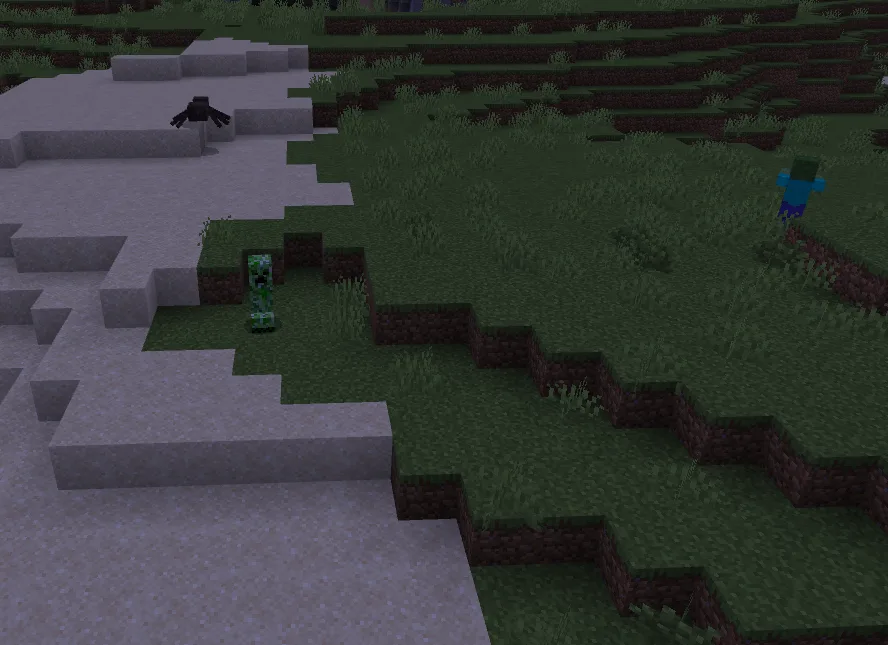
Quick check trick: in Java Edition, press F3 to open the debug screen, then G. That turns on the chunk-border overlay and a light-level display for the block you're aimed at. Any block showing "0" is a spawning candidate. Walk around your base pointing at floors and you'll spot the gaps fast.
In Bedrock, there's no built-in light-level display, but a resource pack called "Debug Utilities" adds one — worth installing if you're serious about a mob-proof base.
Other spawning rules you should know
Light isn't the only thing that matters. Mobs also need:
- A full solid block to stand on — glass, slabs (bottom half), fences and half-blocks all break the spawn. This is why some builders floor their bases with glass or half-slabs instead of relying on torches.
- 2 blocks of headroom — mob spawn needs a 1×2 clear space above the ground block. Anything less than that is safe.
- Sky visibility rules for phantoms — phantoms need a clear line to the sky above you if you haven't slept in 3 in-game days. A solid roof stops them entirely.
Combining these gives you two "cheat" building patterns experienced players use:
- Half-slab floor — floor your outdoor patio with bottom-half stone slabs. Mobs can't spawn there even in complete darkness, because the block isn't "full". No torches needed.
- Glass-topped roof — cover your roof with glass. Lets in daylight (light 15) so no spawns even at night when the sky is dark.
Should you place torches on your roof?
Common myth: "put torches on your roof, otherwise mobs spawn on top and jump inside." Not quite. Mobs on the roof only reach you if there's a path down — glass or slab roofs stop them anyway. If your roof is a flat solid block with no walls above it, yes, mobs can spawn there at night — but they don't hurt anything unless there's a way in. Light the roof if you're bothered by the sight of a lonely zombie pacing around; otherwise leave it.
The exception is creepers. A creeper on your roof, spotting a chicken outside, might blow a hole in it. If you've got a valuable animal pen next to your base, light the roof.
Real-world tip: hide your lights instead of scattering torches
Torches everywhere is the beginner solution. It works, but it looks messy and — on bigger bases — the sheer count of torches can chug your framerate. Once you've built up a bit, swap them out for tucked-away light blocks. Two techniques we use on every base we build:
1. Light blocks under slabs (interior lighting, invisible)
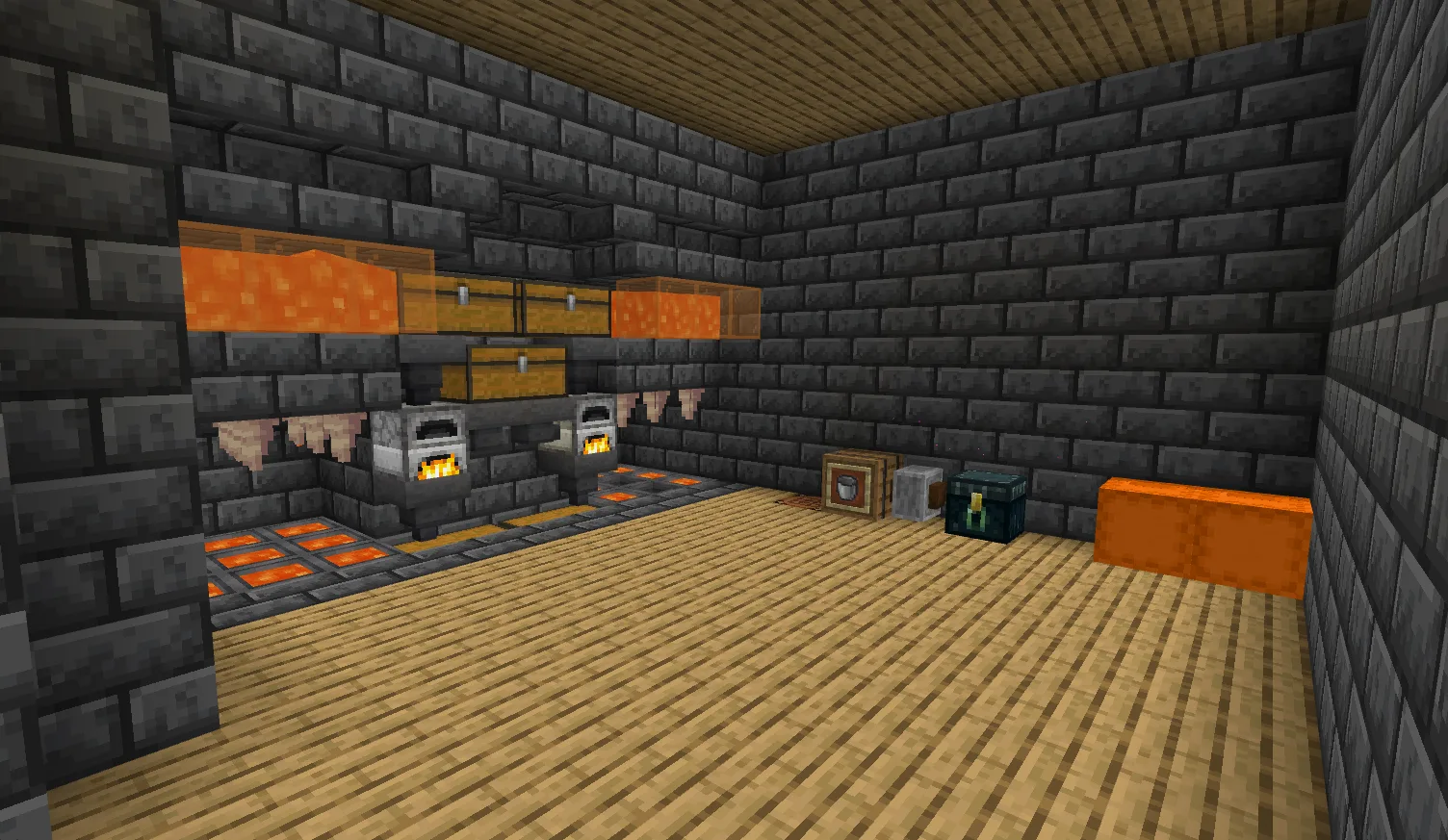
Instead of putting torches on every wall, sandwich a permanent light block (froglight, sea lantern, glowstone, shroomlight, jack o'lantern) between two slabs. On a floor: place the light block, then a top-slab on top of it — the slab hides the light while letting all 15 levels of it through onto the floor. On a ceiling that also acts as the next storey's floor: bottom slab → light block → top slab. Same idea, both floors lit, zero visible fittings.
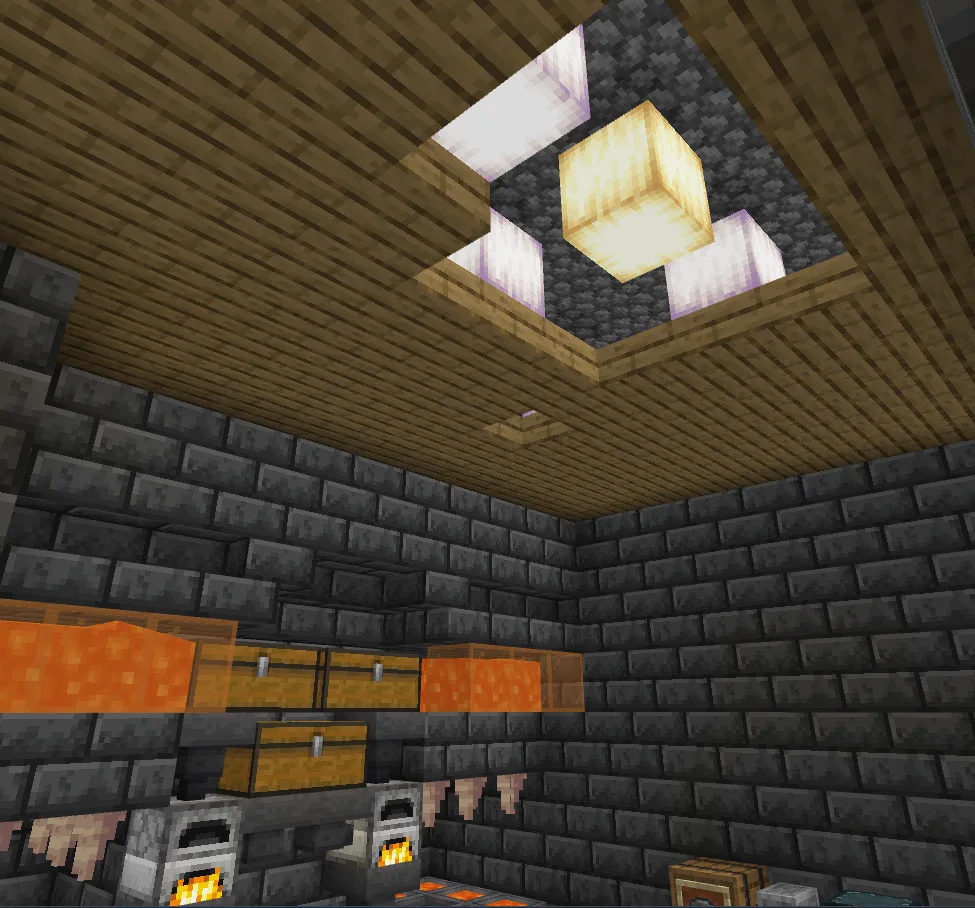
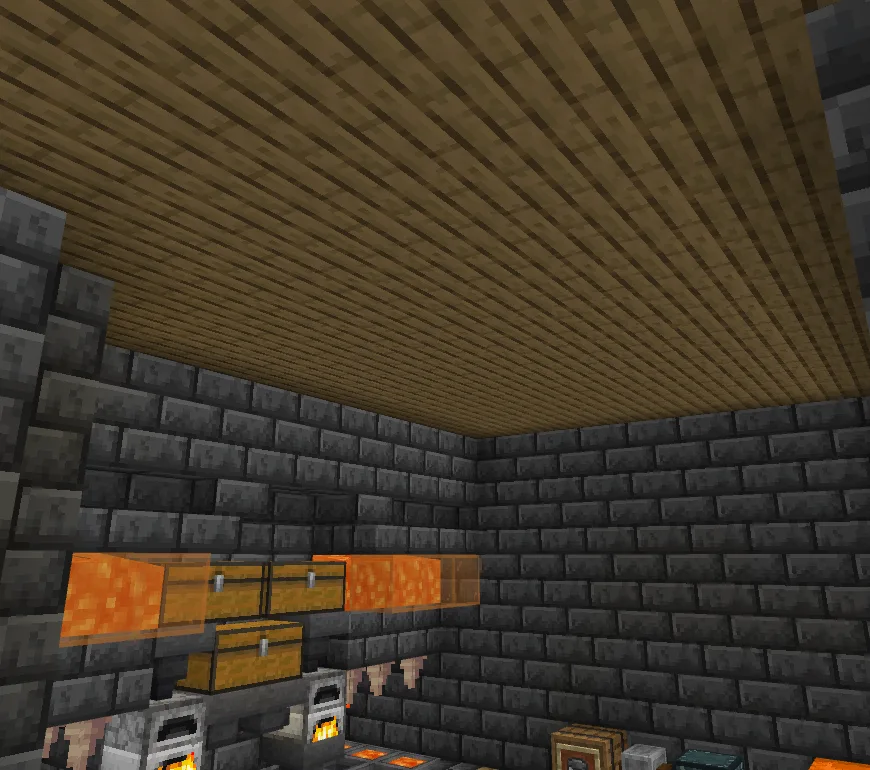
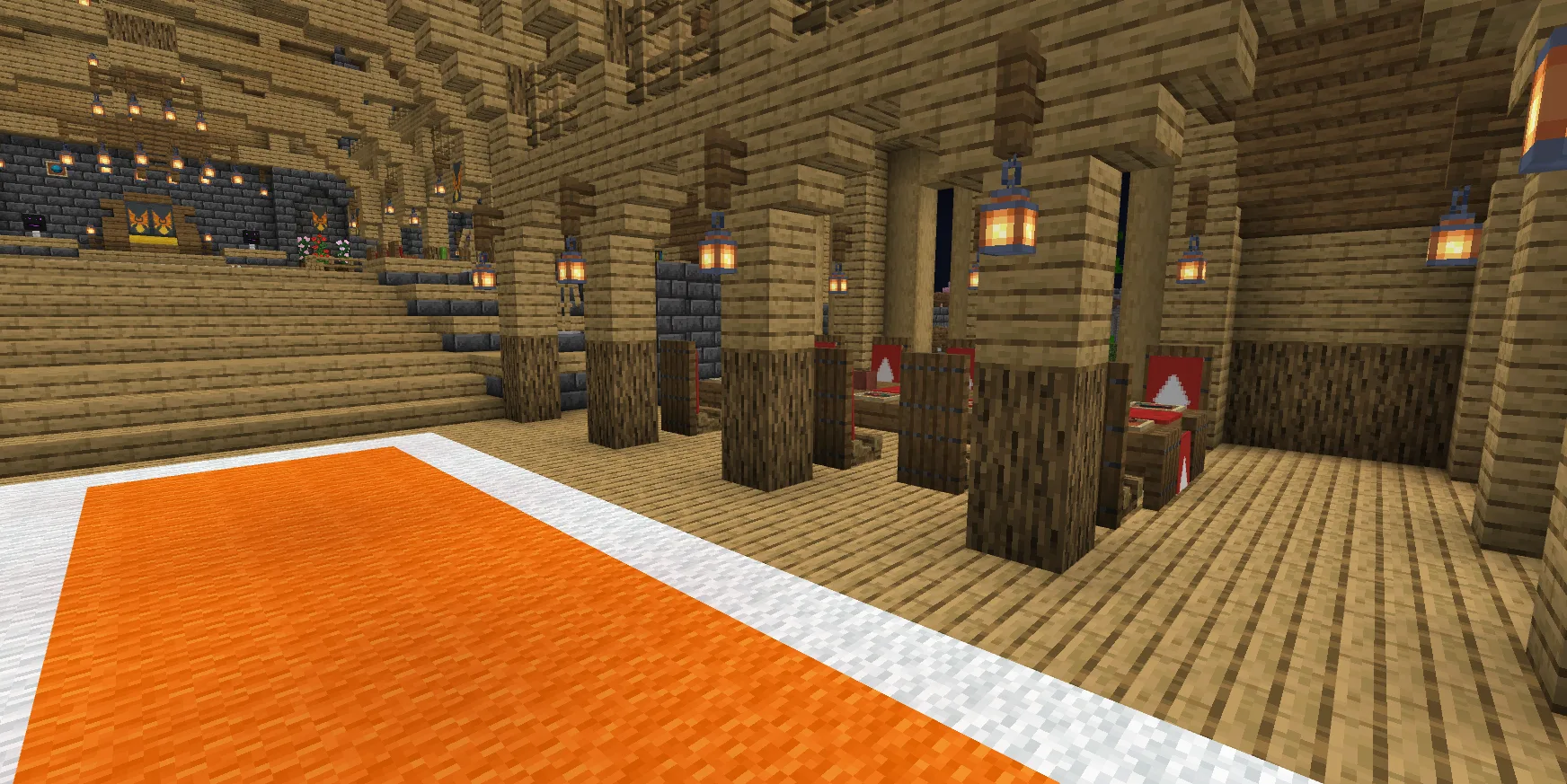
2. Light blocks under dirt paths (outdoor lighting, invisible)
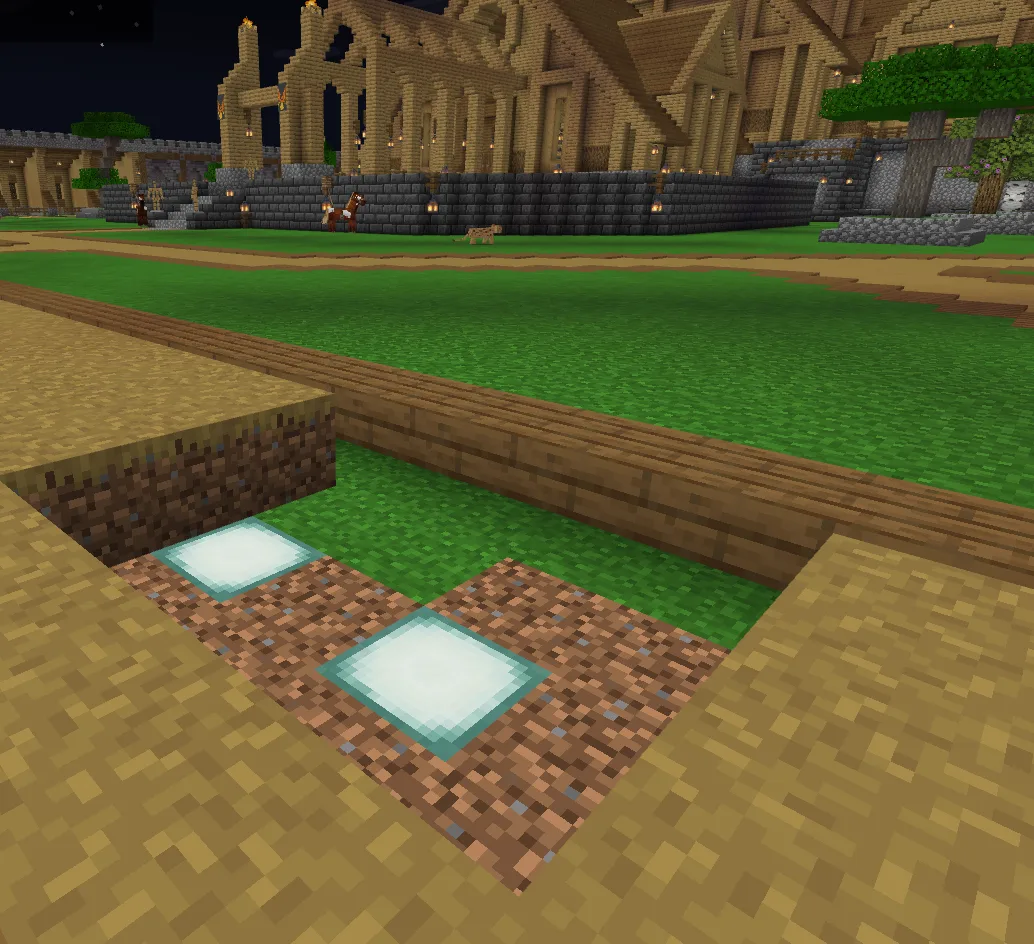
Dirt path blocks (the "grass-path" texture you get by right-clicking grass with a shovel) are actually transparent to light. That means anything glowing directly under them shines up through the path. Lay down dirt paths around your base, hide light blocks under every couple of them, and your whole outdoor area is spawn-safe without a single torch pole spoiling the view.

If you're only just starting out
You don't need froglights on day one. A small starter base can mix a handful of light blocks with a few lanterns — the lantern's design fits farmhouse builds and gives you 15 light while you're still gathering sea pickles or slime for froglights.
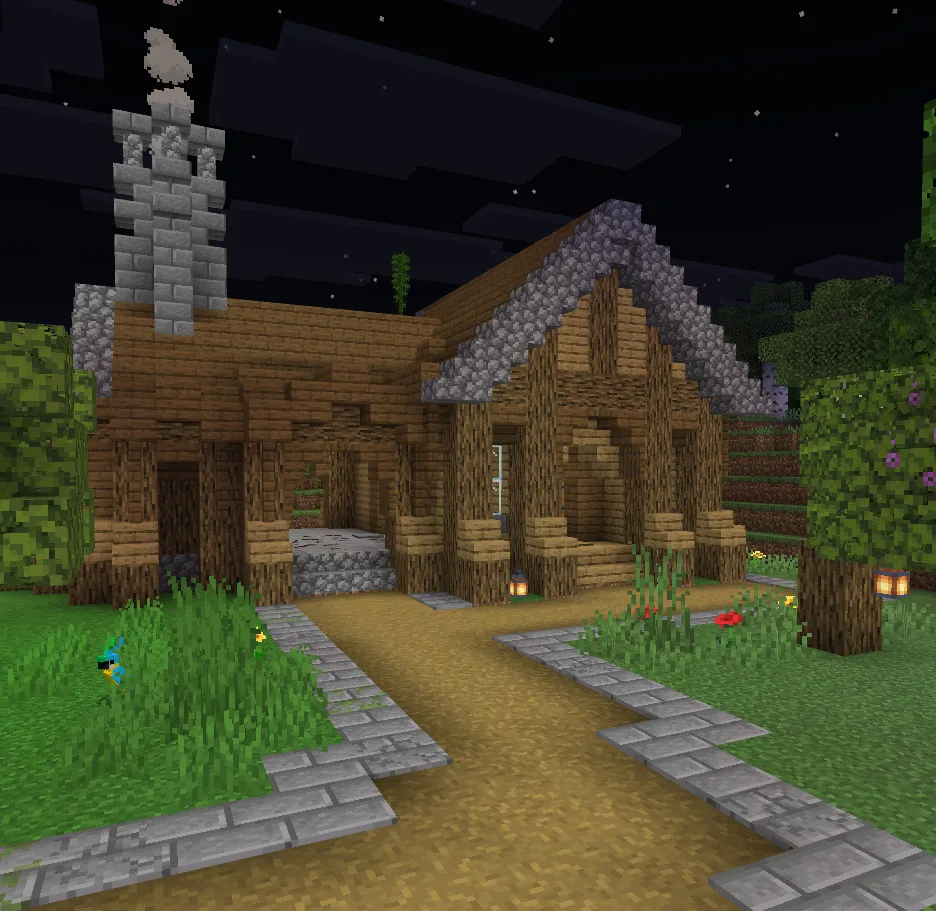
Why bother: torches count as tile entities. On big bases with hundreds of them, the game updates every one every tick — that's where the "torches lag my base" complaints come from. Light blocks are boring blocks with no update cost, and they're always on regardless of redstone or time of day. Trade-off: light blocks are craftable-but-expensive (froglight needs a magma cube fight; sea lanterns need prismarine from an ocean monument; glowstone needs a Nether trip). Torches are free. Grow into the hidden-light setup as your inventory allows.
A quick spawn-proof checklist
- Every floor block in the base area is torch-lit (or glass, or slabs).
- Every stairwell corner has a torch — especially the underside of the steps.
- Any "outdoor" area (garden, walkway, jetty) is either lit or floored with half-slabs.
- Ceilings above walkways: check with F3 + G that they're not dropping to light 0.
- Farm animals' pen: floor with slabs or half-blocks, or add a fully-solid roof.
- Sleep at least once every 3 in-game days to stop phantom spawns.
Do that and you'll never come home to a zombie in your kitchen again.